

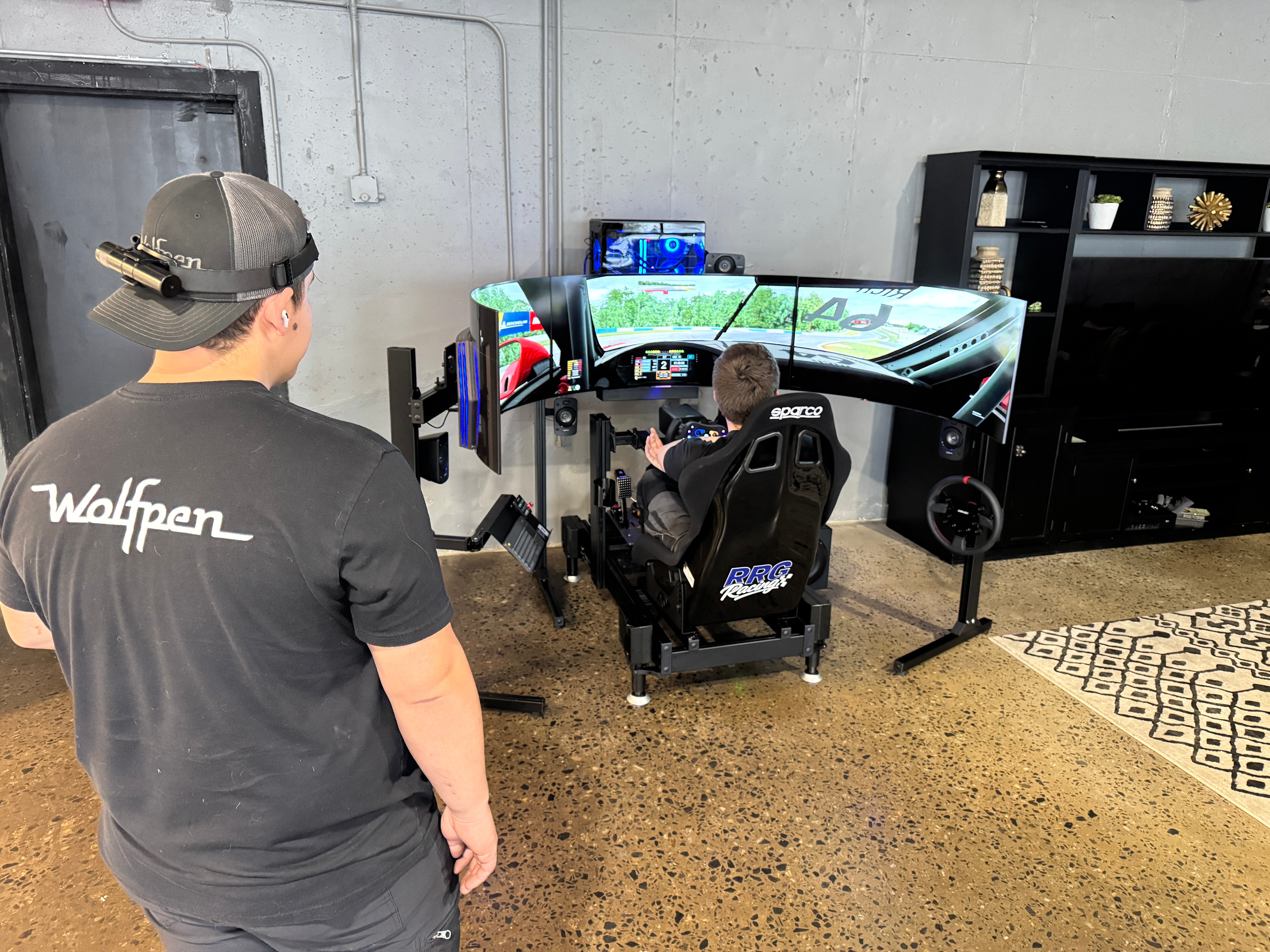
Escape rooms had their moment. Bowling has been done to death. And if your team has to sit through one more trust fall exercise, someone is filing an HR complaint. Companies are looking for something different, something that actually gets people engaged, competitive, and talking to each other without a PowerPoint slide in sight.
Enter sim racing.
Why Companies Are Turning to Simulators
Corporate team building has a credibility problem. Most of it feels forced. People show up, go through the motions, and forget about it by Monday. The best events are the ones where people stop thinking about the fact that it's a "team building activity" and just start having fun.
Racing simulators hit that sweet spot. There's no athletic requirement, no experience needed, and no one has to put on a harness or sign a waiver that makes them question their life insurance policy. But the moment someone sits down and the lights go green, something clicks. Suddenly the quiet guy from accounting is trash talking the VP of sales, and everyone is gathered around the leaderboard arguing about who got the better racing line through turn three.
That kind of organic energy is hard to manufacture. Sim racing just creates it.
What a Corporate Sim Racing Event Looks Like
The format is flexible, which is part of the appeal. A typical corporate event can be structured in a few different ways depending on the group size, venue, and goals.
-
Head to Head Sprint Races
Short, fast races where individuals or pairs compete for the best lap time. This works well for larger groups because rotation is quick and everyone gets multiple sessions. It's easy to run a bracket or points system that keeps people invested even when they're not in the seat. -
Team Endurance Races
This is where the team building element really shines. Groups of three or four share a single car over a set time period, swapping drivers at intervals. The team has to manage tire wear, fuel strategy, and driver consistency. It forces communication, planning, and the kind of collaborative problem solving that no ropes course is going to replicate. -
League Style Competitions
For companies that want something ongoing rather than a single event, a league format spreads the competition across multiple sessions. Departments or office locations race against each other over weeks or months, building a narrative and rivalries that keep engagement high long after the initial event.
Why It Works Better Than Most Alternatives
The best corporate events share a few qualities: low barrier to entry, high engagement ceiling, and something to talk about afterward. Sim racing checks all three.
- Everyone can participate. You don't need to be in shape. You don't need coordination. You don't need to have ever touched a racing game. The learning curve is steep enough to be interesting but shallow enough that someone can be competitive within their first few laps.
- It scales. A sim racing event works for a team of eight or a company outing of two hundred. Multiple rigs running simultaneously keep throughput high, and spectating is genuinely entertaining. People cheer, groan, and coach from the sidelines in a way that doesn't happen at a wine and paint night.
- It creates real conversations. There's something about shared competition that breaks down corporate hierarchy faster than any icebreaker. When a junior analyst beats the CEO by two tenths of a second, the dynamic in the room shifts. People connect over the experience in a way that carries back into the workplace.
The Numbers Behind the Trend
Corporate event spending has been shifting toward experiential formats for years, and sim racing is riding that wave. Esports as a whole continues to grow, and sim racing specifically has seen a surge in mainstream visibility thanks to professional crossover events and manufacturer involvement from companies like Porsche, Ferrari, and McLaren. That brand association gives sim racing a polish that other gaming formats don't have. It's easier to pitch "our team raced at a motorsports facility" than "we played video games for three hours."
The overhead is also favorable for event organizers. Simulators don't require fuel, tires, or track rental fees. Weather isn't a factor. Insurance is straightforward. And the experience can be customized with branded liveries, custom leaderboards, and event specific graphics that make the whole thing feel polished and intentional.
What to Look for in a Venue or Provider
Not all sim racing experiences are created equal. A row of entry level rigs with consumer wheels in a strip mall will deliver a very different impression than competition grade simulators at a real motorsports facility. If the goal is to impress clients or genuinely engage a team, the quality of the equipment and the professionalism of the event matter.
A few things worth considering: Are the simulators competition grade with direct drive hardware, or consumer setups with toy wheels? Is there dedicated staff to manage the event, run timing, and keep things moving? Can the experience be branded or customized to the company? Is the venue itself somewhere worth going, or just a room with some screens?
The venue sets the tone. A well run event at a quality facility tells your team and your clients that you take the experience seriously. A half baked setup with laggy screens tells them you Googled "fun team building ideas" twenty minutes before the budget meeting.
The Bottom Line
Corporate sim racing works because it doesn't feel like work. It's genuinely fun, naturally competitive, and accessible to everyone in the room regardless of age, fitness, or experience. It creates moments people actually remember and stories they retell at the office for weeks.
And unlike a trust fall, nobody ends up on the floor.
RRG Racing hosts corporate sim racing events at Atlanta Motorsports Park in Dawsonville, Georgia, with competition grade turnkey simulators, full event management, and custom branding. To plan your next team outing, visit rrgracing.com.
Share:
How Accurate Is Your Local Sim Track? The Role of LiDAR in Track Fidelity
How Professional Race Teams Use Simulators to Gain a Competitive Edge