

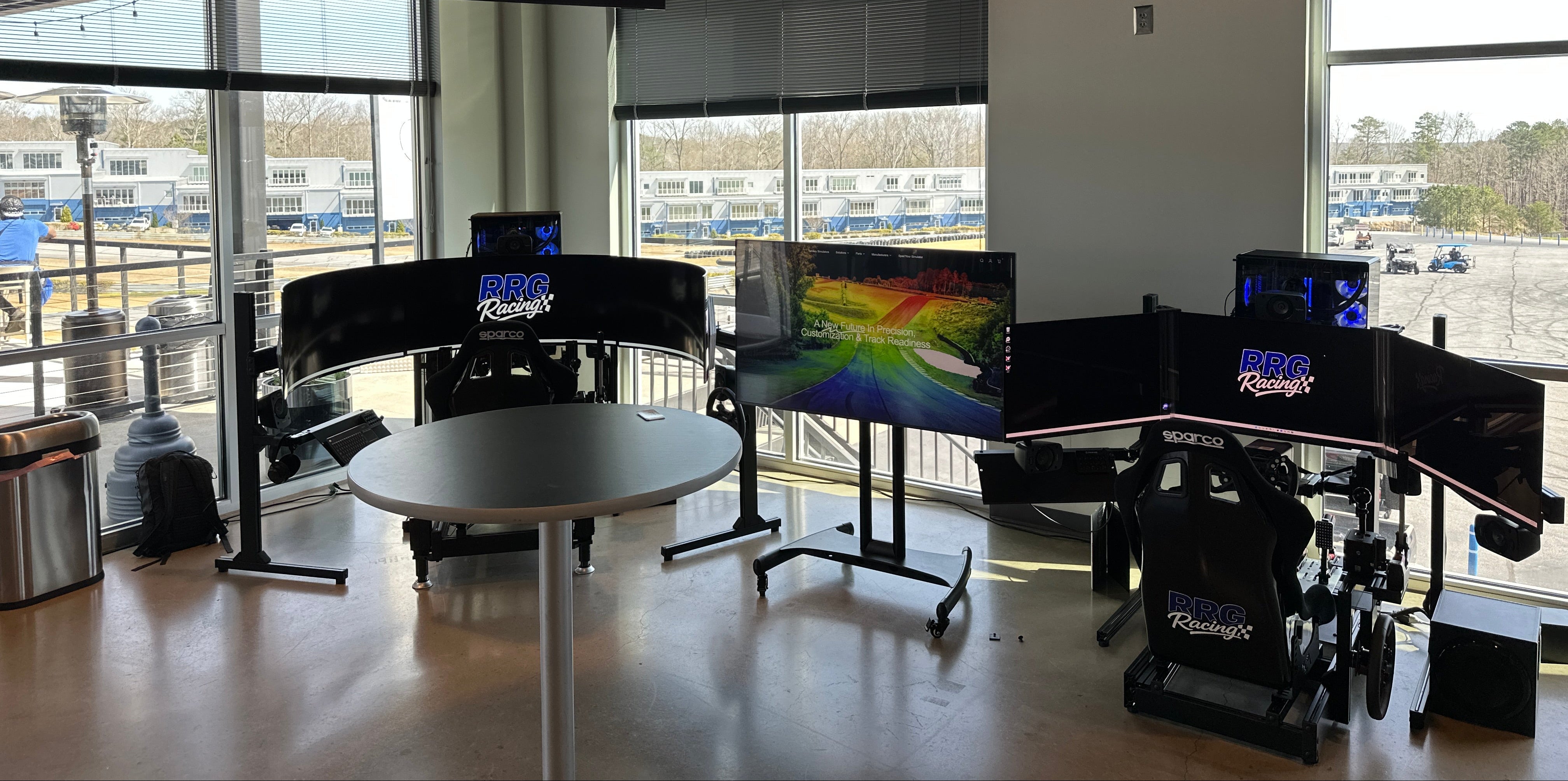
Something shifted in the motorsports and entertainment industry over the last few years, and it happened quietly enough that some operators still haven't noticed.
Racing simulators went from novelty attractions to revenue generating infrastructure.
They're showing up in motorsports parks, indoor karting centers, entertainment complexes, driving experience venues, and even traditional arcades. But the facilities that are succeeding with them aren't just dropping rigs into a corner and hoping for foot traffic. They're integrating simulators into their programming, their customer journey, and their revenue models in ways that fundamentally change how the business operates.
Here's what's happening and why it matters for anyone running a venue in this space.
The Shift from Attraction to Infrastructure
The first generation of simulator installations at entertainment venues followed the arcade model. Put some rigs in a room. Charge per session. Hope people think it's cool.
Some of those installations are still running. Most of them underperform. The reason is simple: without context, a simulator session is a one time experience. The customer tries it, enjoys it, and moves on to the next thing. Retention is low because there's no reason to come back.
The second generation, the one that's reshaping the industry right now, treats simulators as infrastructure that supports the venue's broader business goals. The simulator isn't the attraction. It's the thread that connects multiple revenue streams.
At a motorsports park, the simulator becomes a preparation tool for track day customers, a training platform for coaching programs, and a competition venue for league nights that drive midweek traffic. At an entertainment complex, it becomes the centerpiece of corporate event packages, the engine behind birthday party upgrades, and the competitive hook that turns casual visitors into repeat customers.
The hardware is the same. The business model around it is what separates the venues making money from the ones wondering why their rigs sit empty on Tuesday afternoons.
Motorsports Parks: The Natural Fit
Motorsports facilities have the most organic use case for simulators because their customers are already invested in driving. The simulator doesn't need to convince anyone that racing is exciting. It needs to enhance an experience the customer is already paying for.
Pre track preparation. A driver who can practice the circuit in the simulator before their track day session arrives with a head start. They know the braking zones. They've rehearsed the lines. Their first session on the real track is productive instead of exploratory. This isn't just good for the driver. It's good for the facility. A more prepared driver is a safer driver, which reduces incident rates, track downtime, and insurance exposure.
Coaching program integration. Driving coaches can use simulators to debrief students after a real session, overlay their telemetry against a reference lap, and assign sim homework between track visits. This elevates the perceived value of the coaching program and creates an additional touchpoint that keeps the student engaged with the facility between events.
Weather and downtime monetization. Rain days at a motorsports park are lost revenue. Mechanical failures that sideline a customer's car are lost sessions. A simulator facility gives the operation something to offer when the real track is unavailable. Instead of sending customers home, you redirect them to the sim center. Revenue that would have been lost stays in the building.
Year round revenue. In regions with seasonal weather, outdoor motorsports facilities may operate at reduced capacity for several months of the year. Simulators are weather independent. A well programmed sim center can maintain consistent revenue through winter months when the track itself is dormant.
Entertainment Venues: Beyond the Arcade Model
For entertainment venues, karting centers, and family entertainment complexes, simulators represent an opportunity to offer a premium tier experience that commands higher pricing and attracts a different customer segment.
Premium experience uplift. A standard karting session at an indoor facility runs $20 to $30. A simulator session on a high fidelity rig with direct drive force feedback and triple monitors can command $30 to $50 for the same time window. The perceived value is higher because the equipment feels more serious, more immersive, and more exclusive than a standard go kart.
Corporate event differentiation. Every entertainment venue offers corporate packages. Most of them include karting, bowling, laser tag, or some combination. Adding a simulator racing component with a structured competition format (qualifying, heats, a final, a trophy) gives your venue a differentiator that your competitors don't have. Corporate clients remember unique experiences, and unique experiences generate repeat bookings and referrals.
Customer journey extension. A family visiting a karting center might spend 45 minutes on the track. If the facility also has simulators, that family might spend another 30 to 45 minutes in the sim center. The total visit duration doubles, which increases per visit revenue and the probability that they'll purchase food, beverages, and merchandise during the extended stay.
Birthday and group packages. For younger audiences, a simulator racing party is a compelling alternative or addition to traditional karting. It can accommodate children who are too young or too small for full size karts, and it offers a controlled environment where parents feel comfortable. Packaging simulator time with food, a trophy, and a photo opportunity creates a premium party offering that commands higher pricing than standard options.
The League Model: Recurring Revenue That Builds Community
If there's a single programming strategy that has proven itself across venue types, it's the league model.
A racing league is a structured competition that runs over multiple weeks or months, with points standings, a championship, and usually some form of awards at the end. Participants register for the season, show up on a regular schedule (usually weekly or biweekly), and compete against the same group of people in a consistent format.
Why this works so well for venues:
Predictable revenue. Season registration or recurring league fees provide stable, predictable income. Unlike walk in traffic, which fluctuates with weather, holidays, and competitive alternatives, league revenue is committed in advance.
Midweek activation. Leagues typically run on weeknight evenings, which is when most venues experience their lowest foot traffic. A Tuesday night league fills rigs during hours that would otherwise be empty, turning dead time into productive revenue.
Community building. League participants develop relationships with each other and with the venue. They become regulars. They refer friends. They're more likely to attend special events, purchase memberships, and become advocates for the business. Community is the single most powerful retention mechanism available to any venue, and leagues create it naturally.
Competitive engagement. Points standings, rivalries, and championship battles create emotional investment that keeps participants coming back even after a bad night. Nobody drops out of a league they're leading. Nobody concedes a championship fight. The competitive structure sustains engagement across the entire season.
Spectator traffic. League nights bring friends, family members, and curious onlookers. These spectators are potential future customers who get to see the simulators in action, watch the competition, and feel the energy of the event. Many of them end up signing up for the next season.
What the Data Shows
Facilities that have implemented structured simulator programming consistently report several trends:
Customer retention rates for league participants are significantly higher than for casual walk in customers. A casual customer might visit once or twice. A league participant visits weekly for months.
Per customer revenue increases when simulators are part of a multi activity visit. The sim session extends the visit, which increases secondary spending on food, beverages, and merchandise.
Corporate event bookings increase when simulators are offered as a premium add on or primary activity. Event planners actively seek out unique experiences, and simulator racing consistently rates among the highest satisfaction activities in post event surveys.
Coaching program enrollment increases when simulators are available for between session practice. Students who can practice in the sim between real coaching sessions progress faster, see more value in the program, and retain longer.
Equipment Considerations for Venue Installations
Venue rigs have different requirements than home rigs. The equipment needs to be:
Durable. Customer facing equipment takes a beating. Components need to withstand thousands of sessions per year from users of all sizes and experience levels. Industrial grade wheelbases, reinforced mounting points, and easy to clean materials are essential.
Standardized. When you're running a league or a corporate event, every rig in the room needs to be identical. Consistency eliminates complaints about equipment fairness and simplifies staff training.
Fast to reset. Turnover between customers needs to be measured in minutes, not ten minute setup routines. Preloaded configurations, simple seat adjustment mechanisms, and a one button session launch are operational necessities.
Visually impressive. In a venue, the simulators are part of the atmosphere. They need to look professional and exciting. Clean cable management, branded elements, ambient lighting, and a polished overall appearance contribute to the customer's perception of value.
Supported and serviceable. When a rig goes down in a venue, it's lost revenue. Having a relationship with a builder who can provide parts, support, and maintenance is critical. This is not a "build it and forget it" investment.
The Competitive Landscape
Here's the reality for venue operators in 2026: your competitors are either already installing simulators or actively planning to.
The indoor karting industry has seen rapid adoption over the last three years. Motorsports parks are adding sim centers as standard amenities. Standalone sim racing centers are opening in urban markets with structured league programming from day one.
Facilities that move early establish their brand as the local destination for sim racing, build the community first, and capture the league participants before a competitor does. Facilities that wait risk entering a market where the community has already formed somewhere else.
The technology is mature. The business models are proven. The customer demand is there. The only variable left is execution.
RRG Racing designs and builds turnkey simulator installations for motorsports parks, entertainment venues, and commercial facilities. From single rig setups to multi station race centers, we deliver the hardware, the configuration, and the operational knowledge to make it work. Based at Atlanta Motorsports Park in Dawsonville, Georgia. Visit rrgracing.com to start the conversation.
Share:
How Much Space Do You Actually Need for a Home Racing Simulator?
How LiDAR Data Powers Driver Coaching, Track Design, and Safety Analysis