

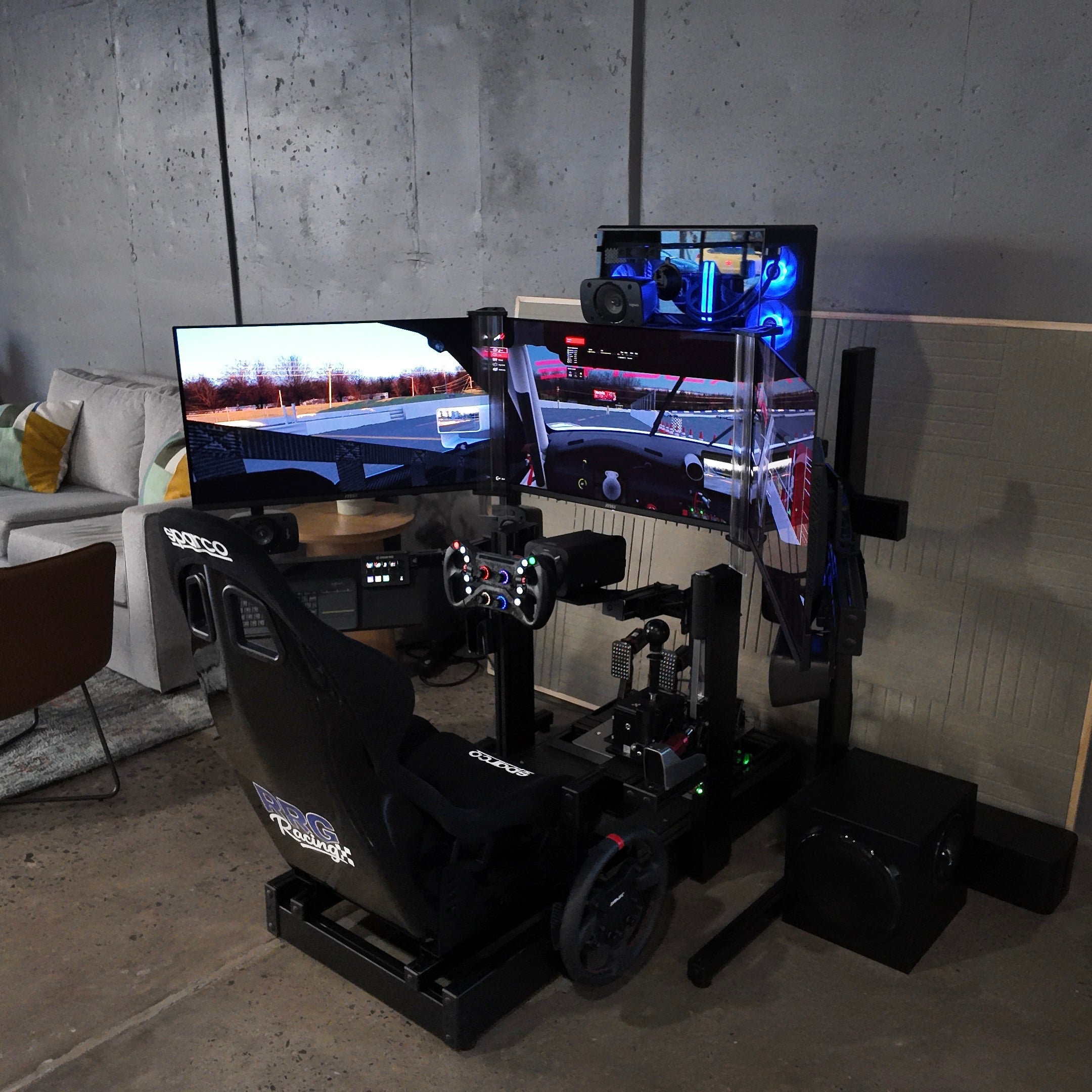
Sprint racing is about raw speed. Endurance racing is about everything else.
Managing tires over a double stint. Keeping concentration when your body wants to check out at the 90 minute mark. Hitting consistent lap times when the car's balance shifts as fuel burns off. Navigating traffic cleanly for hours. Making pit strategy calls that gain or lose positions without turning a single fast lap.
If you're building a simulator for endurance racing, whether you're preparing for real world events or competing in online leagues like the iRacing 24 Hours of Le Mans or the Assetto Corsa Competizione endurance series, your setup requirements are different from someone who only runs qualifying laps and 20 minute sprints.
Here's what changes and why it matters.
Comfort Is Not a Luxury. It's Infrastructure.
In a sprint race, you can tolerate a slightly uncomfortable seat. You can deal with a pedal position that's not quite right. You can push through fatigue because the session ends in 20 minutes.
In endurance racing, every minor discomfort compounds. A seat that pinches your lower back will become unbearable after two hours. A pedal position that forces your knee into an awkward angle will create real pain after three. A wheel mounted too high will fatigue your shoulders. A screen at the wrong height will strain your neck.
This isn't about being soft. Professional endurance drivers obsess over seat fit and cockpit ergonomics precisely because they understand that physical discomfort degrades mental performance. When your body starts hurting, your concentration drops. When your concentration drops, your lap times drift. When your lap times drift, you lose positions without making a single mistake.
The seat is the most important comfort decision on the rig. For endurance work, look for a seat with proper lumbar support, adequate side bolstering without being overly restrictive, and enough padding to remain comfortable over multi hour stints. Racing bucket seats look great but many are designed for the kind of aggressive support needed in a real car under g forces. In a simulator, where lateral forces on your body are minimal or absent (unless you're running motion), a slightly more comfortable seat with good support often outperforms a hardcore racing bucket over long stints.
Pedal distance and angle need to be dialed in so that your legs aren't fully extended or overly bent at rest. Your ankle should be able to modulate the brake pedal for hours without cramping. A common mistake is positioning the brake pedal too far away, which forces the driver to reach with their foot and creates calf fatigue over time.
Wheel height and distance should put your arms in a relaxed, slightly bent position with the wheel at roughly chest height. If your shoulders are elevated to reach the wheel, they'll fatigue fast. If your elbows are locked straight, you lose fine motor control in your steering inputs.
Spend the time to get these dimensions right before you start racing. Twenty minutes of adjustment can save you hours of discomfort.
Hardware Considerations for Long Sessions
Endurance racing puts different demands on your equipment than sprint racing. Some components that perform perfectly in short bursts reveal weaknesses when pushed for hours at a time.
Wheelbase and Motor Heat
Direct drive wheelbases generate heat during operation. In a 20 minute sprint, this is irrelevant. In a four hour endurance stint, some wheelbases will thermal throttle, reducing force feedback output to protect the motor. When your force feedback drops mid race, you lose information from the tires at exactly the moment you need it most.
If endurance is your focus, look for a wheelbase with strong thermal management. Check reviews and community feedback specifically about long session performance. Some manufacturers design for sustained output. Others design for peak performance over shorter durations.
Pedal Consistency
Load cell pedals are the baseline for endurance work because pressure based braking creates repeatable muscle memory. But over a long stint, your braking foot fatigues, and your pressure inputs naturally change. The pedal system you choose should have a progressive enough feel that small variations in leg strength don't translate into massive variations in braking force.
Hydraulic and active pedal systems tend to excel here because their resistance curves are more forgiving of fatigued inputs. A tired foot on a very stiff load cell can feel like hitting a wall, which leads to either over or under braking. A hydraulic pedal's fluid progression absorbs those small inconsistencies more gracefully.
PC Cooling and Stability
Your PC needs to run for hours without thermal throttling, crashing, or dropping frames. Endurance sessions are the ultimate stress test for your hardware.
Make sure your cooling solution, whether air or liquid, is rated for sustained loads. Clean your fans and radiators regularly. Monitor GPU and CPU temperatures during practice stints to identify any thermal issues before they ruin a race.
Frame rate consistency matters more than peak frame rate for endurance. A system that holds a rock solid 90 fps for six hours is better than one that hits 144 fps for the first hour and starts dropping frames as components heat up. Dial your graphics settings to a level your system can maintain indefinitely, not just for the first ten laps.
Triple Screens and VR Fatigue
For endurance racing, triple monitors are generally preferred over VR. The reasons are practical:
VR headsets generate heat against your face. Over a multi hour stint, this becomes genuinely uncomfortable for most drivers. Fogging, sweating, and the pressure of the headset on your face and head create fatigue that has nothing to do with the racing itself.
Triple monitors let you sit naturally, stay cool, glance at secondary information (pit timing, stint plans, strategy notes) on a separate device, and maintain a level of physical comfort that VR can't match over long durations.
If you prefer VR and can tolerate it for extended sessions, that's a legitimate choice. But if you're building a rig specifically for endurance, triples are the safer bet for sustained comfort.
Software and Data Setup
Endurance racing in the sim requires more preparation than showing up and driving fast. Your software environment needs to support the kind of strategic thinking that defines the discipline.
Fuel Calculation
Know your car's fuel consumption per lap on the specific track you're racing. Most sim platforms display real time fuel data, but having a pre calculated fuel plan before the race starts is essential. You should know how many laps you can run per stint, when you need to pit, and how much fuel to add at each stop.
Spreadsheets work. Dedicated fuel calculation apps work better. Several community built tools exist for iRacing and ACC that automate fuel math and integrate with the sim's telemetry output. Set these up before race day, not during.
Pit Strategy Planning
Endurance racing is won and lost in the pits. How long you stay out, when you take tires versus fuel only, and how you manage safety car periods are all decisions that require preparation.
Before the race, map out your ideal pit windows based on fuel load. Then build contingency plans for safety cars, mechanical issues, and weather changes. Having a written strategy visible near your rig during the race eliminates the panic of making split second decisions under pressure.
Communication (for Team Events)
If you're racing in a multi driver endurance event, communication is critical. Discord, TeamSpeak, or similar voice platforms should be tested and dialed in before race day. Your audio setup needs to be clear enough that you can hear your teammates without removing focus from the driving.
A headset with a good microphone is preferable to speakers and a desk mic. You need to be able to communicate pit timing, car condition, and strategy updates quickly and clearly.
Telemetry and Stint Review
Record your stint data. Even in the middle of a race, being able to review your lap times, braking consistency, and tire degradation trends between stints provides actionable information for the remaining distance.
Post race telemetry review is equally valuable. Endurance racing exposes consistency issues that sprint racing hides. A two tenths drift per lap over a 30 lap stint costs six seconds. Over a full race, those small drifts add up to minutes.
Physical Preparation
This section gets overlooked constantly, and it shouldn't.
Sim racing endurance events are physically taxing. Not in the same way as driving a real car where g forces and heat play a major role, but in ways that are real and measurable: eye fatigue, mental exhaustion, dehydration, posture related discomfort, and concentration decay.
Hydrate before and during the race. Keep water within arm's reach. Dehydration affects cognitive performance before you feel thirsty. If you're doing a four hour stint, you should be drinking regularly.
Eat something before the race. Not a huge meal, but something with sustained energy. A banana, some nuts, a light sandwich. Your brain burns glucose when it's focused, and an empty stomach will catch up with you.
Stretch before you sit down. Five minutes of stretching your back, shoulders, neck, and legs makes a noticeable difference in how you feel two hours into a stint.
Take your driver changes seriously. If you're in a team event, use your time out of the car to stand up, stretch, walk around, and reset mentally. Don't sit at your rig watching the race and stressing. Your body needs the break.
Building the Right Rig for the Discipline
If you're looking at this from a rig building perspective, here's a quick hierarchy of what matters most for endurance specific use:
Priority one: Seat comfort and ergonomics. This is the foundation. Everything else is secondary if you can't stay physically comfortable for the duration.
Priority two: Pedal quality and feel. Consistent, repeatable braking over hours is the single biggest performance differentiator in endurance racing. Invest in the best pedals your budget allows.
Priority three: Thermal management. Wheelbase cooling, PC cooling, and room temperature control all need to support sustained operation. Build for the marathon, not the sprint.
Priority four: Visual setup. Triples with proper field of view calibration are the endurance standard. Ensure your monitors are positioned to minimize neck movement and eye strain over long sessions.
Priority five: Audio. Clean, clear audio matters in endurance more than in sprint racing. You need to hear tire squeal, engine notes, and teammate communication simultaneously. A good headset or well positioned speakers are worth the investment.
The Mental Game
The final piece, and arguably the most important one, is mental endurance. The simulator can help you build this, but only if you train for it deliberately.
Run full length practice stints. Not ten laps. Not twenty minutes. Simulate the actual duration of your race stints and practice maintaining concentration for the entire distance. If your race involves two hour stints, practice two hour stints. If your race is a solo six hour event, practice holding pace for six hours.
Develop a mental reset routine for the moments when your focus drifts. Every driver has a technique. Some focus on breathing for a lap. Some talk through their braking points out loud. Some count their inputs. Find what works for you and practice it until it's automatic.
Accept that your pace will drift. No human maintains peak performance for four straight hours. The goal isn't to be perfect. The goal is to minimize the drift and recover quickly when you notice it happening. The best endurance drivers aren't the fastest. They're the ones who lose the least time when they're not at their best.
Final Thought
Endurance racing rewards a completely different set of skills than sprint racing, and your simulator setup should reflect that. The hardware needs to sustain performance over hours, not minutes. The ergonomics need to keep you comfortable long after the initial adrenaline wears off. The software needs to support strategic decision making, not just lap time chasing.
Build the rig for the long race. Train your body and your mind for the long race. And when the final hour arrives and everyone else is falling apart, you'll be the one still hitting your marks.
RRG Racing builds simulators engineered for every discipline, including the long ones. Whether you're preparing for a real world endurance event or competing in online 24 hour races, we spec rigs that perform from the first lap to the last. Based at Atlanta Motorsports Park in Dawsonville, Georgia. Visit rrgracing.com to build yours.
Share:
How Professional Race Teams Use Simulators to Gain a Competitive Edge
What Makes a Simulator "Turnkey"