

Yes.
That's the answer. But saying "yes" without explaining the how, the why, and the limits is how misconceptions get started. So let's do this properly.
Sim racing doesn't automatically make you faster on a real track. It's not magic. Buying a rig doesn't subtract seconds from your lap time any more than buying a guitar makes you a musician. But used correctly, with intention and structure, a simulator develops specific skills that transfer directly to real world driving performance in ways that are measurable, repeatable, and increasingly well documented.
Here's exactly what transfers, what doesn't, and how to get the most out of the crossover.
What Transfers Directly
Track Knowledge
This is the most immediate and universally acknowledged transfer from sim to real. If you've driven 100 laps at Road Atlanta in a simulator, you arrive at the real Road Atlanta knowing the layout. You know the corner sequence. You know that Turn 7 tightens on exit. You know that the uphill esses are faster than they look. You know where the major braking zones are.
This doesn't sound revolutionary until you consider the alternative: spending your first three real sessions just figuring out where you are on the circuit while the driver next to you, who practiced in the sim, is already refining their lines.
For drivers who travel to unfamiliar tracks for races, this is the single highest value application of sim racing. The time and money saved by not having to "learn the track" during real sessions is substantial.
Braking Technique
On a simulator with load cell pedals, your foot learns to modulate brake pressure the same way it does in a real car. You push harder for more braking force. You ease off to release the brakes progressively. You trail brake into corners by gradually reducing pressure while adding steering.
This muscle memory transfers because the physical input mechanism is fundamentally the same. Pressure in, braking force out. The sensitivity and force levels are different between a sim pedal and a real brake system, but the neuromuscular pattern, the relationship between foot pressure and deceleration, is identical.
Drivers who develop their braking technique in the sim consistently show smoother, more repeatable brake traces when they get to the real track. This is visible on data. It's not a subjective claim.
Racecraft
Racing against real people online develops skills that are almost impossible to practice in solo track day sessions. Reading the driver ahead of you. Timing a pass. Defending a position without being reckless. Managing a draft. Staying patient when the opportunity isn't there yet.
These skills transfer because they're cognitive and strategic, not physical. The car is different. The forces are different. But the decision making, the spatial awareness, the ability to execute a plan while surrounded by unpredictable competitors, that's the same in any vehicle on any surface.
Drivers who have hundreds of hours of online race experience often exhibit better racecraft in their first real race than drivers with far more real seat time but minimal competitive experience. They've seen more situations. They've made more decisions. They've learned what works and what gets you crashed.
Consistency and Focus
A simulator lets you practice maintaining focus over extended periods. Running 30 consecutive laps at consistent pace, managing tire degradation mentally, staying on your marks when your concentration wants to wander. These are all skills that degrade without practice and develop with repetition.
Real track time is expensive and limited. You get a few sessions per day at most. A simulator gives you unlimited laps, which means unlimited opportunities to practice the discipline of consistency. Drivers who train in the sim between track events maintain their focus and consistency at a higher level than drivers who only drive on race weekends.
Visual Processing
Sim racing trains your eyes to process information quickly: corner entry speed judgments, the movement of cars around you, flag stations, brake lights, closing rates. The speed at which your visual system processes these inputs improves with repetition.
When these same visual tasks appear on a real track, the processing is already trained. You've seen cars approaching from behind in your mirrors thousands of times. You've judged closing rates into braking zones on hundreds of occasions. The visual pattern recognition is developed, even though the medium was a screen instead of a windshield.
What Transfers Partially
Racing Lines and Corner Approaches
Your sim racing lines will give you a solid starting point at a real track, but they won't be perfect. Grip levels differ between the sim and reality. Tire behavior isn't identical. The confidence level you have in the sim, where there's no financial consequence for a mistake, may not match the confidence you feel at 130 mph with concrete walls on either side.
Expect to arrive with a good general approach to each corner and then refine it based on how the real car feels on the real surface. Your sim line is the starting hypothesis. Real track time is the validation.
Throttle Application
Throttle technique transfers in principle but requires recalibration in practice. A sim pedal provides no physical feedback about traction loss. In a real car, you can feel the rear axle loading through the seat and hear the tires in a way that no sim audio perfectly replicates.
Drivers who develop smooth, progressive throttle application in the sim carry that smoothness to the real car, but the specific points at which they apply full throttle will shift based on real world grip levels and the mechanical feedback the car provides.
Setup Understanding
Working with car setups in the sim, adjusting springs, dampers, anti roll bars, brake bias, builds a conceptual understanding of how these parameters affect car behavior. This understanding is valuable in the real world, but sim setup and real setup don't correlate perfectly because the underlying models are approximations of reality.
A driver who has experimented with setup changes in the sim understands the language of vehicle dynamics. They can communicate with their engineer or coach more effectively. But they shouldn't assume that the spring rate that worked in iRacing will work identically on their real car.
What Doesn't Transfer
G Force Management
Real driving subjects your body to sustained g forces that a static simulator cannot replicate. Managing neck fatigue through high speed corners. Resisting the urge to lift when 2g of lateral load is pushing you into the door panel. Breathing through heavy braking when the harness compresses your chest. These are physical adaptations that only come from real seat time.
Motion platforms reduce this gap but don't eliminate it. No simulator produces the sustained physical load that a real race car does.
Risk Perception and Consequence Management
In a simulator, a crash costs you nothing. You press "restart" and you're back on track. This fundamentally changes your risk calculus. Drivers who are fearless in the sim may find that real consequence, the potential for injury, car damage, or financial loss, changes their behavior in ways they didn't expect.
Learning to push hard while managing real risk is a skill that can only be developed in real conditions. The sim can help you find the pace. The real track is where you learn to find the pace while respecting the consequences.
Physical Vehicle Feedback
No simulator perfectly replicates the total sensory package of a real car. The seat of the pants feel when the rear end steps out. The sound of the tires at the limit. The vibration through the steering column at specific frequencies. The heat radiating from the brakes after a hard session.
These physical cues inform driving decisions in subtle ways that the simulator doesn't fully reproduce. Drivers transitioning from sim to real need to recalibrate their sensory inputs, learning to trust the physical feedback from the real car the same way they learned to trust the digital feedback from the sim.
What the Research Shows
This isn't just anecdotal. Studies and real world data increasingly support the transfer of skills from simulation to real driving.
Professional racing teams at every level, from Formula 1 to club racing, use simulators as development tools precisely because they've measured the performance benefits. Drivers who prepare in the sim consistently perform better during initial sessions at new tracks than drivers who don't. Teams that develop setups in the sim arrive at events with better baseline configurations than teams that don't.
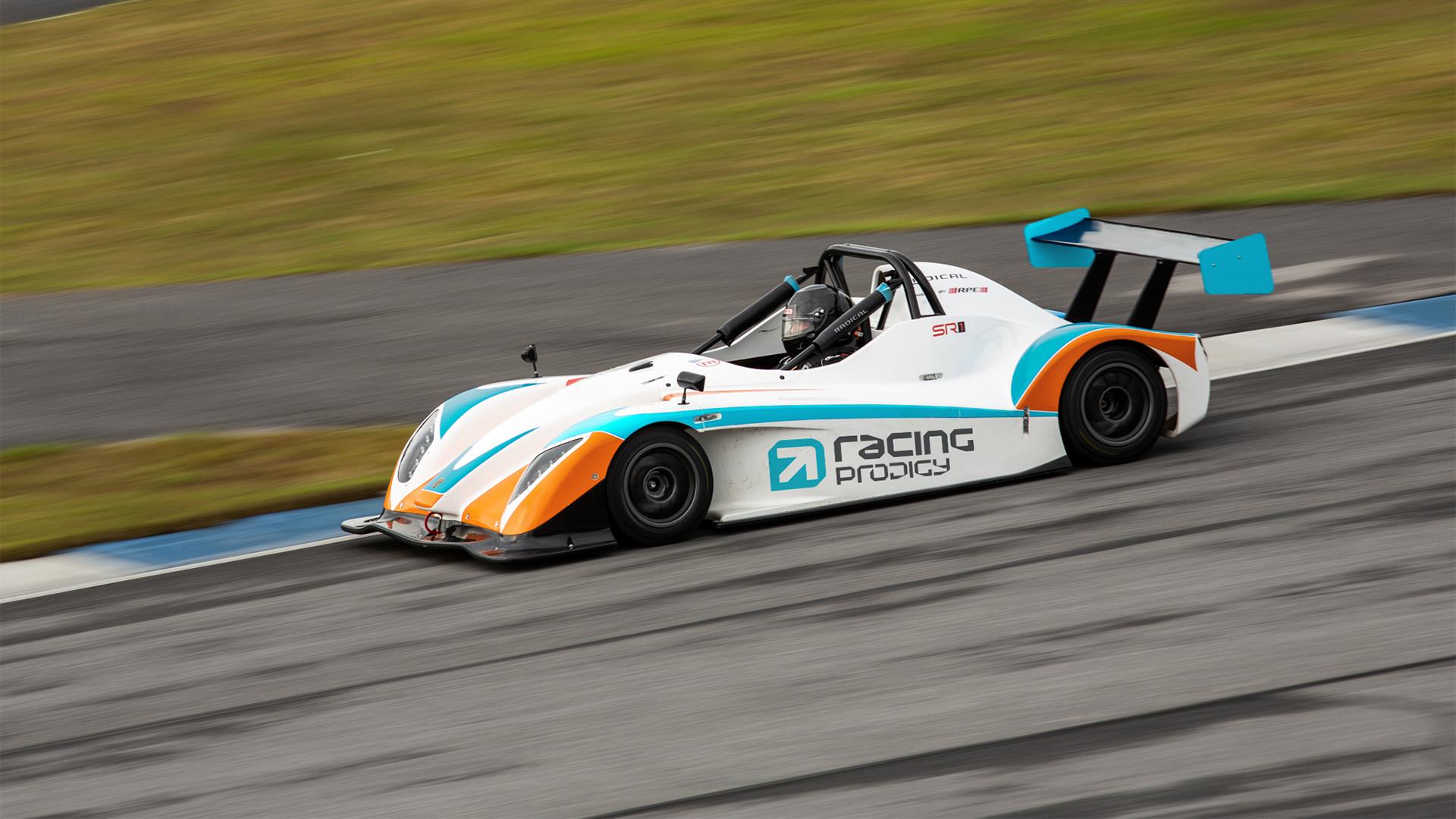
Programs like Racing Prodigy have demonstrated that drivers with no prior real world experience can transition from sim racing to competitive real world racing at a level that challenges experienced track drivers. These aren't one off stories anymore. They're repeatable outcomes.
How to Maximize the Transfer
If you want sim racing to make you faster on a real track, approach it as a training tool rather than a game. That means:
Practice the tracks you'll actually drive. If you have a race at Sebring in three weeks, spend your sim time at Sebring. Not at Spa. Not at Monza. At Sebring. Targeted preparation beats generalized seat time for real world transfer.
Use laser scanned tracks. The accuracy of the sim track directly affects the accuracy of your preparation. Braking references learned on a scanned track will be close to correct at the real circuit. References learned on an inaccurate track model might be actively harmful.
Focus on technique, not lap time. Your sim lap time and your real lap time will not match. The grip levels, the tire models, and the physics all differ enough that direct time comparisons are meaningless. Focus on developing clean technique: smooth braking, precise turn in, progressive throttle. These process skills transfer regardless of the absolute pace.
Record and review telemetry. If your sim platform supports telemetry, use it. Review your braking consistency, your throttle application, and your line choice. The same analytical habits that make you faster in the sim make you faster on the real track.
Race against people. Solo hotlapping develops technique. Racing against humans develops racecraft. You need both for real world competition.
Don't skip the real thing. Sim racing is the most cost effective training tool available, but it's a supplement to real track time, not a replacement for it. The physical, emotional, and sensory experience of real driving develops skills that no screen can replicate.
The Bottom Line
Can sim racing make you faster on a real track?
Yes. Measurably. Consistently. The track knowledge, braking technique, racecraft, and consistency you develop in the sim transfer directly to real world performance. The drivers and teams who use simulation as part of their preparation outperform those who don't, all else being equal.
But the simulator is a tool, and like any tool, it only works if you use it correctly. Practice with intention. Focus on technique over time. Race against people. And when you get to the real track, stay open to recalibrating what the sim taught you against the reality of the car, the surface, and the forces your body is feeling for the first time.
The sim gives you the knowledge. The real track gives you the experience. Put them together, and you're faster than anyone who relied on just one.
RRG Racing builds simulators for drivers who want real results, not just screen time. Whether you're preparing for your first track day or your next championship round, we build rigs designed to make the transfer from virtual to real as effective as possible. Based at Atlanta Motorsports Park in Dawsonville, Georgia. Visit rrgracing.com to build the rig that makes you faster.
Share:
The Buyer's Guide to Choosing the Right Seat and Seating Position
LiDAR Scanned Tracks vs. Artist Built Tracks: Can You Feel the Difference?