

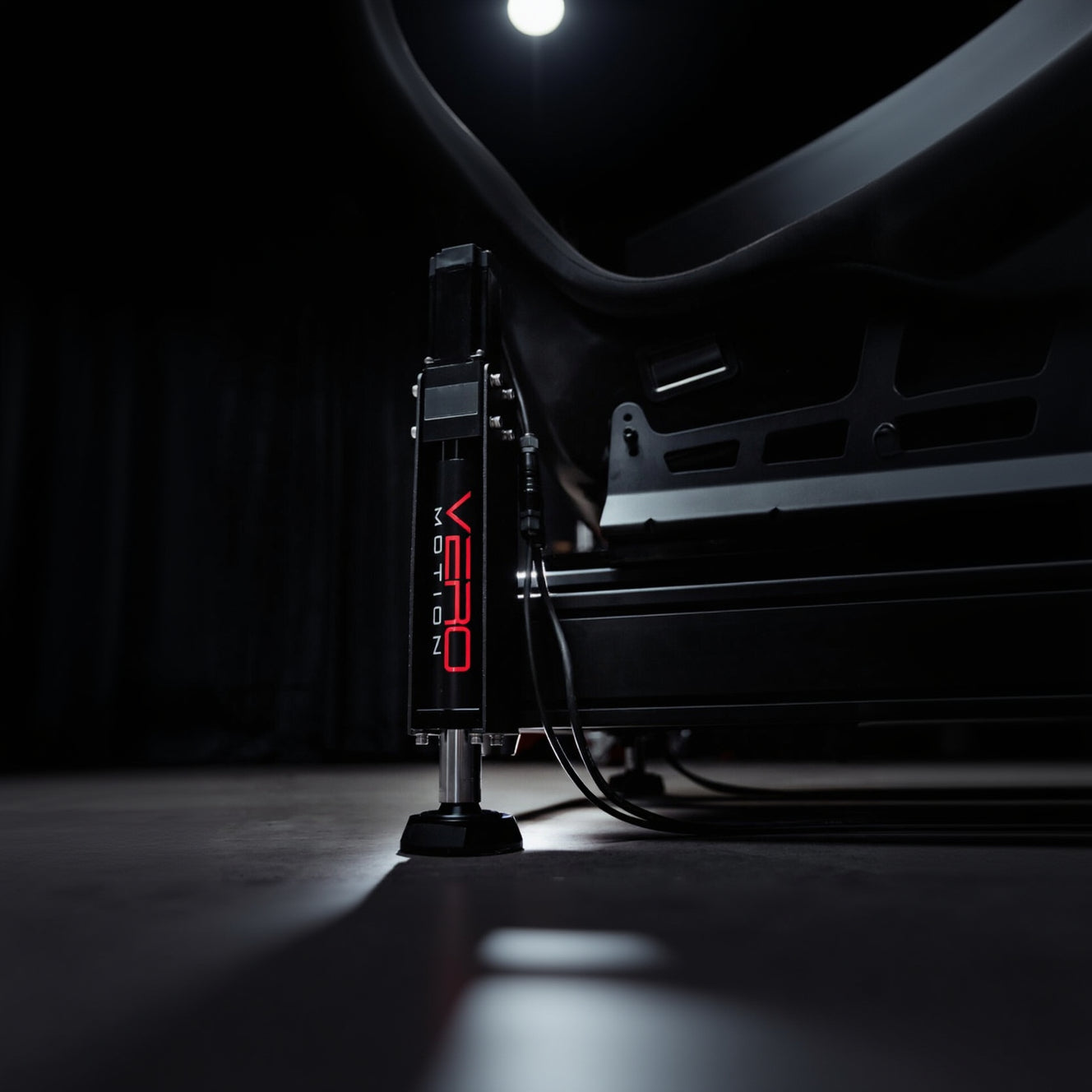
Racing simulators have come a long way from bolted down seats and basic wheel setups. Today, one of the biggest decisions a buyer faces is whether to invest in a motion platform or stick with a high quality static rig. It's a question that comes up constantly, and the answer isn't as straightforward as most people think.
Let's break it down.
What Exactly Is a Motion Simulator?
A motion simulator adds physical movement to your rig. Through actuators mounted beneath the chassis, the platform tilts, rolls, pitches, and in some cases surges to replicate the forces a driver would feel in a real car. The idea is simple: if you can feel the car losing grip through your body, not just through the wheel, your reactions become faster and more natural.
Most motion systems fall into one of a few categories:
2DOF: Provides pitch (braking and acceleration lean) and roll (cornering lean). This is the entry point for motion and offers a meaningful step up from static.
3DOF: Adds heave (vertical movement), which introduces the sensation of curbing, bumps, and surface changes.
6DOF: Full range of movement including surge, sway, pitch, roll, yaw, and heave. This is what professional teams and high end commercial venues use.
The more degrees of freedom, the more realistic the sensation.
What Does a Static Rig Do Well?
A well built static simulator is far from a compromise. In fact, many of the fastest sim racers in the world compete on rigs with zero motion at all. Here's why static setups still hold their own:
Force Feedback Does the Heavy Lifting. A quality direct drive wheelbase already communicates an enormous amount of information through your hands. Tire slip, weight transfer, surface texture, and mechanical grip are all translated through the steering column. For a skilled driver, this is often enough to be both competitive and deeply immersive.
Pedal Feel Is the Unsung Hero. Load cell and hydraulic pedal systems give precise, consistent feedback through your feet. Braking is arguably the most important input in racing, and a great set of pedals on a rigid, static rig delivers that feel without any motion system at all.
Rigidity and Consistency. A static rig with no flex gives you repeatable input every single lap. There's nothing shifting underneath you, nothing introducing variables. For drivers focused on raw pace and consistency, that stability can actually be a performance advantage.
Lower Cost, Lower Maintenance. Static rigs are simpler to build, easier to maintain, and far less likely to need calibration or repair. There's no software layer managing actuator behavior, and no mechanical wear on moving parts.
Where Motion Pulls Ahead
So if static rigs are that good, why does motion exist at all?
Because the human body processes more than just hands and feet.
When you drive a real car hard into a braking zone, your entire body shifts forward. When you carry speed through a fast sweeper, you feel lateral load pressing you into the side of the seat. When you clip a curb at 120 mph, your spine knows it. A static rig simply cannot replicate those sensations.
Motion fills in the gaps that force feedback and pedals leave behind:
Body Awareness (Proprioception). Motion platforms engage your vestibular system, the same one your body uses to maintain balance. This gives your brain a more complete picture of what the car is doing, which leads to faster, more instinctive reactions.
Immersion That Compounds Over Time. The longer your session, the more motion matters. Over a 30 or 60 minute stint, subtle cues from a motion platform help reduce fatigue and keep you connected to the car in a way that staring at screens alone cannot.
Training Transfer to Real Cars. For drivers using simulators to prepare for actual track time, motion closes the gap between virtual and real. The muscle memory you build on a motion rig translates more directly to the seat of a real race car.
Catching Slides and Corrections. On a static rig, you often rely on visual cues to recognize oversteer. With motion, your body feels the rear stepping out before your eyes confirm it. That fraction of a second can be the difference between a save and a spin.
The Cost Reality
Let's talk numbers, because this is where many buyers make their decision.
Static rigs with a direct drive wheelbase, quality pedals, triple monitors, and a solid chassis can land anywhere from $10,000 to $20,000 depending on components.
Adding a motion platform on top of that can range from $3,000 for a basic 2DOF system to $20,000+ for a full 6DOF setup with quality actuators and tuning software. At the top end, complete motion simulators from professional builders can exceed $50,000.
That's a significant jump. And it raises the real question: does the experience and training benefit justify the investment for your specific goals?
Who Should Go Motion?
Motion makes the most sense for:
Enthusiasts who want the setup that makes people stop talking when they walk into the room. If you've already committed to doing this right, motion is the statement piece that turns your rig from impressive to untouchable.
Professional and amateur drivers using simulation as a genuine training tool to prepare for real world competition. The closer your simulator mirrors the sensations of a real car, the more valuable your seat time becomes.
Motorsports venues and entertainment centers that want to offer clients an unforgettable experience. Motion is a differentiator. A customer who has never felt a simulator move beneath them will remember it.
Coaching programs and driving schools that want to teach car control, not just fast laps. Feeling a car rotate under braking is a teaching moment you can't replicate on a screen alone.
Who Should Stay Static?
Static is the right call for:
Competitive esports drivers focused on lap times and consistency. Most top level online racers use static rigs because the performance advantage of motion is marginal compared to the cost.
Budget conscious buyers who would rather put money into a better wheelbase, pedals, and displays than into actuators. Dollar for dollar, upgrading your static rig's core components will often make you faster than adding entry level motion.
The Verdict
Motion is not a gimmick. It's a legitimate training and immersion tool that, when done right, meaningfully changes how you interact with a simulated car.
The upgrade is worth it when your goals demand it: real world training transfer, professional venue experiences, or the pursuit of the most complete simulation possible. For everyone else, the smartest path is to build a rock solid static foundation first and add motion down the road if and when it makes sense.
Either way, the most important thing is seat time. The best simulator is the one you actually use.
Whether you're exploring your first static rig or ready to step into a full motion setup, RRG Racing builds turnkey simulators tailored to your goals. Based at Atlanta Motorsports Park in Dawsonville, Georgia, RRG Racing pairs real world motorsport knowledge with precision built hardware. Visit rrgracing.com to get started.
Share:
Active Pedals vs Hydraulic vs Load Cell: Which Pedal System Is Right for You?